Source Eco-Friendly Bamboo Matcha Whisk for Tea Making, Coffee Brewing, and Art Projects
Compare 30 listings of Eco-Friendly Bamboo Matcha Whisk from verified Chinese manufacturers. Review specifications like prong count, size, and customization options to find the right tool for tea preparation and other applications.
Key considerations
Products List


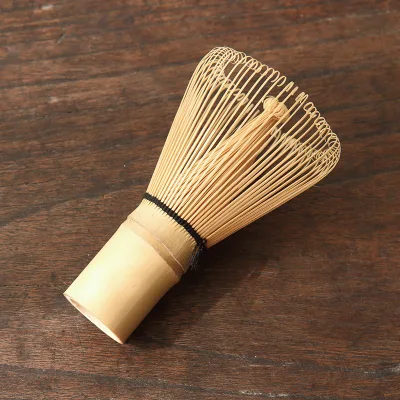


High Quality Tea Matcha Whisk Natural Bamboo Traditional Matcha Brush Chasen Matcha Whisk
$2.69 - $2.88
MOQ: 500 Pieces

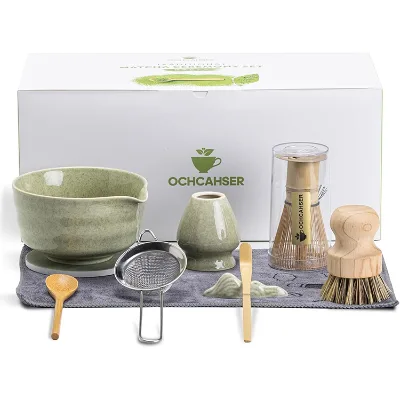
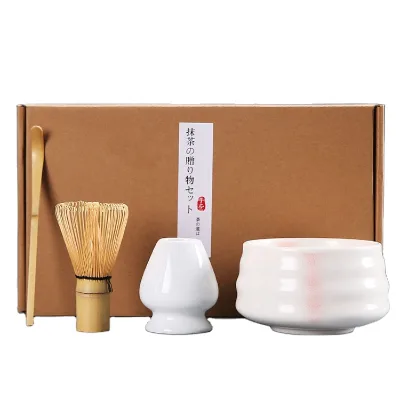
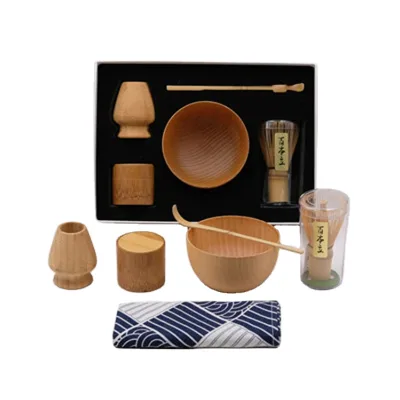
Handmade Eco-Friendly Japanese Whisk Set Modern Design Bamboo Whisk for Matcha
$7.99 - $8.25
MOQ: 200 Sets


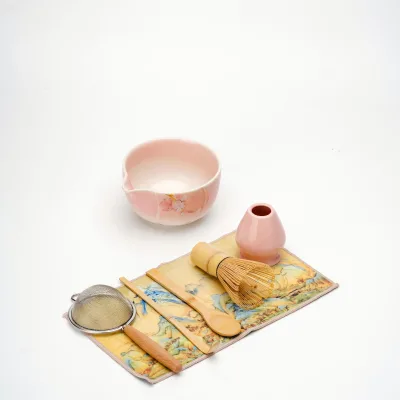
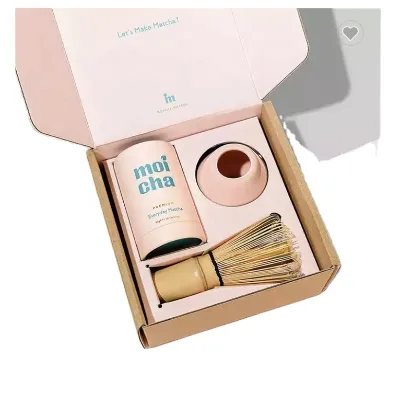

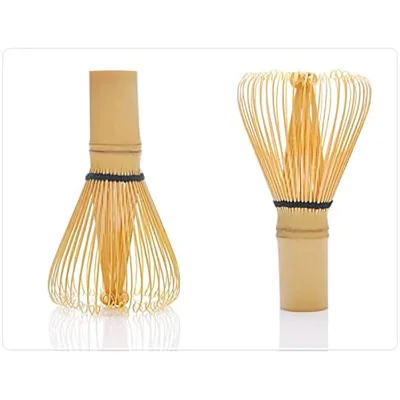


Custom Logo Bamboo Matcha Tea Whisk Bamboo Chasen Matcha Whisk with Kraft Box
$1.52 - $3.95
MOQ: 100 Pieces


OEM Logo Custom Handcrafted Golden Brown Bamboo Chasen Traditional Matcha Whisk
$4.99 - $7.08
MOQ: 100 Pieces




Comprehensive Sourcing Guide
Strategic Sourcing Guide for Eco-Friendly Bamboo Matcha Whisks
Understanding Product Specifications and Material Integrity
When sourcing an eco-friendly bamboo matcha whisk, the primary objective is to identify a tool that balances traditional craftsmanship with modern manufacturing consistency. The core material for these implements is bamboo, a renewable resource that offers a unique combination of flexibility and durability essential for whisking matcha powder into a smooth, frothy suspension. In the current market, specific product attributes indicate that the material is often selected for its natural color and structural integrity. Buyers should verify that the bamboo used is harvested from sustainable sources, as the "Eco-Friendly" designation is a critical selling point for environmentally conscious brands.
Technical specifications vary significantly across different models, ranging from specific prong counts to dimensional standards. For instance, some high-performance models feature a volume of 100 prongs, which is a standard metric for ensuring adequate aeration of the tea. The physical dimensions are equally critical; observed standards include diameters of 1.5cm, 2.8cm, or 3cm, with lengths varying between 8cm and 15cm. Other models adhere to specific dimensional standards such as D6 * H10cm or 12.5 * 7.8cm. The "Traditional" and "Vintage" styles often correlate with these specific dimensions, mimicking the shape of the chasen used in Japanese tea ceremonies. However, "Customized Size" options are also available, allowing buyers to tailor the whisk to specific brand requirements or ergonomic preferences. The single package size for standard units is often observed around 11.0 x 12.0 x 7.0 cm, which is a vital data point for logistics planning.
Compliance, Certification, and Food Safety Standards
For any product intended for food preparation, compliance with food safety regulations is non-negotiable. The sourcing guide must emphasize the verification of "Food Grade" status. While the market data indicates that products are often described as "A Grade" or "a Arade" (likely a typo for A Grade) with food-grade certification, buyers must independently verify these claims through third-party testing reports. The term "Food Grade" implies that the bamboo has been treated or processed to ensure it does not leach harmful substances into the beverage.
Buyers should look for evidence of compliance with international food safety standards, such as FDA regulations in the United States or EU food contact material directives. Although specific certification names are not universally listed in the provided product data, the presence of "Food Grade" in product attributes suggests that manufacturers are aware of these requirements. It is essential to request certificates of analysis (CoA) or specific food safety compliance documents before placing large orders. Additionally, the "Eco-Friendly" claim should be backed by sustainability certifications or declarations regarding the sourcing of the bamboo, ensuring that the supply chain does not contribute to deforestation or environmental degradation. The "Stocked" availability of some items suggests that these products may already meet baseline compliance requirements, but verification remains the buyer's responsibility.
Cost Drivers and Pricing Structure Analysis
The pricing of eco-friendly bamboo matcha whisks is influenced by several distinct factors, including material quality, customization levels, and order volume. The observed price range in the market spans from $1.52 to $68 per unit, a wide variance that reflects differences in craftsmanship, prong density, and branding. The lower end of this spectrum typically represents standard, non-customized models with basic packaging, while the higher end often includes premium features, custom branding, or specialized packaging solutions.
A significant cost driver is the "Customized" nature of the product. Options such as "Customized Packing," "Customize Logo Acceptable," and "Customized Size" add layers of complexity to the manufacturing process, thereby increasing the unit cost. The "OEM&ODM: YES!" and "OEM and ODM: Warmly Welcomed" attributes indicate that suppliers are equipped to handle custom orders, but these services come with a premium. Furthermore, the "MOQ" (Minimum Order Quantity) plays a crucial role in the final cost structure. While some suppliers offer low MOQs as low as 1 piece for sampling, bulk orders often require quantities ranging from 300 to 5000 pieces. The specific MOQ of 300 pcs or 500 pcs observed in the data suggests that economies of scale are a primary factor in reducing the per-unit price.
Payment terms also influence the financial dynamics of the transaction. Common terms include "T/T" (Telegraphic Transfer) and trade terms like "EXW," "Fob," and "CIF." These terms dictate who bears the cost of shipping and insurance, directly affecting the landed cost of the goods. Buyers must calculate the total cost of ownership, including freight, which is often "Freight Collect" for samples, to understand the true economic impact of their sourcing decision.
Typical Applications and Market Segmentation
The primary application for these whisks is in the preparation of matcha tea, a traditional Japanese green tea. The product is explicitly categorized under "Tea maker" and "Coffee & Tea Sets," indicating its versatility in broader beverage preparation contexts. The "100 prongs" specification is particularly relevant for high-quality matcha preparation, as the fine tines are necessary to break up clumps of tea powder and create a stable foam. This makes the product suitable for professional tea houses, specialty coffee shops, and retail consumers who value authenticity.
The market segmentation for these products is diverse, catering to both traditional and modern aesthetics. The "Traditional" and "Vintage" styles appeal to purists and those interested in the cultural heritage of tea ceremonies. Conversely, the availability of "Customized" designs and "Eco-Friendly" branding appeals to modern consumers who prioritize sustainability and unique product identities. The "Natural Bamboo Color" and "Unicolor" options provide a clean, minimalist aesthetic that fits well with contemporary interior design trends. Additionally, the "Single" and "Sets" packaging options allow for flexibility in distribution, whether selling individual units to retail customers or bulk sets to hospitality clients.
Supplier Evaluation and Verification Protocols
Evaluating a supplier for bamboo matcha whisks requires a rigorous approach to ensure reliability and quality. The "place of origin" is predominantly "Fujian, China," a region known for its bamboo industry. Buyers should verify the specific factory location within this region to assess the local supply chain maturity. The "PORT" of shipment, often "Fuzhou/Xiamen," provides insight into the logistical capabilities of the supplier.
Key evaluation criteria include the supplier's capacity for "OEM&ODM" services. The explicit mention of "OEM&ODM: YES!" and "Warmly Welcomed" suggests that these suppliers are open to customization, but buyers must assess their technical capability to execute specific design requests. The "Sample Time" of 7-10 days is a standard metric for evaluating responsiveness; suppliers who can deliver samples within this window demonstrate efficient production planning. Furthermore, the "Sample Free, Freight Collect" policy is a common practice that allows buyers to test product quality without incurring material costs, though shipping fees remain the buyer's responsibility.
Buyers should also scrutinize the "Quality" claims. While terms like "A Grade" and "Food Grade" are used, they must be substantiated. A robust supplier evaluation process includes requesting physical samples, reviewing past client references, and conducting on-site audits if possible. The "Single gross weight" of 0.18 kg is a useful metric for calculating shipping costs and verifying that the product weight matches the description, which can be an indicator of material density and quality.
Quality Control and Long-Term Procurement Strategy
Maintaining consistent quality is paramount in the procurement of bamboo matcha whisks. The "prod_packing" methods, such as "Carton" or "Inner Box + Export Carton," play a significant role in protecting the delicate prongs during transit. Buyers should ensure that the packaging is robust enough to prevent breakage, as damaged whisks are unsellable. The "Customized Packing" option allows for branding but must be tested for durability.
For long-term procurement, establishing a clear quality control protocol is essential. This includes defining acceptance criteria for prong count, dimensional accuracy, and surface finish. The "Standard" specifications, such as the 1.5/2.8/3cm diameter and 8/10/10.5/15cm length, should be strictly adhered to. Any deviation from these standards should be flagged for immediate correction. Additionally, buyers should consider the "Lead Time" and "Sample Time" when planning inventory. A consistent "Sample Time" of 7-10 days indicates a predictable production cycle, which is beneficial for supply chain planning.
Long-term success also depends on the supplier's ability to scale. The "MOQ" range of 1 to 5000 pieces suggests that suppliers can accommodate both small startups and large enterprises. However, buyers should negotiate terms that allow for flexibility in order quantities as market demand fluctuates. The "Eco-Friendly" attribute should be a consistent theme in the product line, as sustainability is a growing trend in the beverage industry. By maintaining a focus on quality, compliance, and supplier reliability, buyers can secure a steady supply of high-quality bamboo matcha whisks that meet the demands of their customers.
Final Considerations for Procurement Success
In conclusion, sourcing eco-friendly bamboo matcha whisks requires a balanced approach that considers technical specifications, compliance, cost, and supplier reliability. The market offers a wide range of options, from standard "Traditional" models to fully "Customized" solutions. Buyers must navigate the price range of $1.52 to $68 by understanding the value drivers behind each price point. Verification of "Food Grade" status and "Eco-Friendly" claims is critical to ensure product safety and brand integrity. By leveraging the available data on dimensions, materials, and packaging, buyers can make informed decisions that align with their strategic goals. Ultimately, a successful procurement strategy hinges on clear communication, rigorous quality control, and a partnership with suppliers who share a commitment to excellence and sustainability.
FAQs
What is the material and quality grade of the whisk?
The whisk is made from natural bamboo and is rated as A Grade with Food Grade certification. This ensures the material is safe for tea preparation and meets standard quality expectations for food contact items.
Can I customize the size and logo of the product?
Yes, customized sizes and logos are acceptable for this product. Buyers can request specific dimensions and branding, with the supplier offering OEM and ODM services to meet unique requirements.
What are the standard dimensions and prong counts available?
Standard models feature diameters of 1.5, 2.8, or 3 cm with lengths of 8 to 15 cm. Some specific models offer a volume of 100 prongs to ensure effective whisking for matcha tea preparation.
What are the minimum order quantities for bulk purchases?
Minimum order quantities typically range from 300 to 500 pieces depending on the specific model. Some suppliers may accept lower quantities for sampling, but bulk orders generally require meeting these thresholds.
How long does it take to receive a product sample?
Sample time is generally 7 to 10 days for production. While samples may be free, freight charges are usually collected from the buyer, and the origin is typically Fujian, China.
What payment terms and shipping methods are accepted?
Accepted payment terms include T/T, with shipping options like EXW, FOB, and CIF. Products are typically shipped from ports in Fuzhou or Xiamen within export cartons or inner boxes for protection.
Is the product considered eco-friendly and sustainable?
Yes, the product is explicitly described as eco-friendly due to its bamboo material. This renewable resource is selected for its structural integrity and environmental benefits compared to synthetic alternatives.